
Do this first
- Stop the water if you safely can. Close the main water valve, or the valve to the leaking fixture.
- Stay clear of electricity. Don't walk through standing water if outlets, cords or appliances are in it. If the breaker panel is in a dry spot, switch off power to the wet area.
- Lift what you can. Move rugs, electronics and papers off wet floors, and put foil or plastic under furniture legs.
- Take photos. Pictures of the water and the damage before cleanup help with an insurance claim.
- Don't use a household vacuum. Regular vacuums aren't built for water and can shock you.
How we extract water
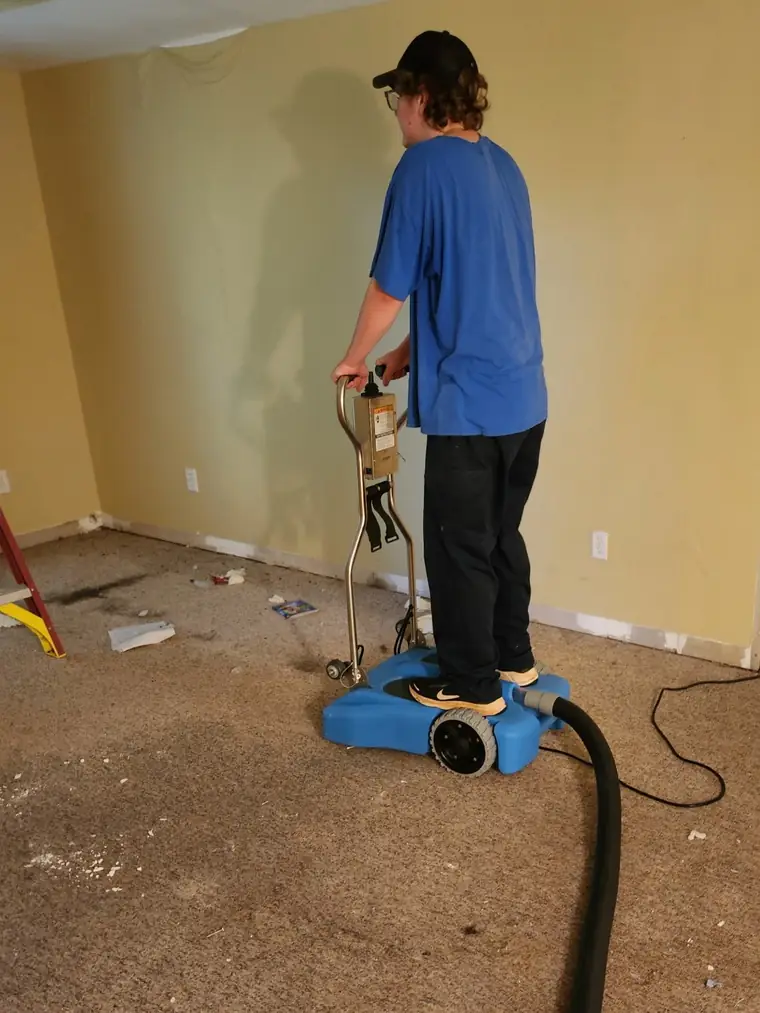
We start with an inspection and moisture readings to see how far the water has traveled: under flooring, into walls and beneath cabinets. Then we extract it, using truck-mounted units on larger jobs and portable units where hoses can't reach.
Getting as much water out as possible up front leaves less for the drying stage. Once the standing water is gone, we set up drying and check moisture every day until materials are dry.
Carpet, hardwood and tile
Carpet and pad, hardwood and tile each hold water differently. Hardwood floors can often be dried in place with drying mats. When a material can't be saved, we explain why and include it in the written scope.
Equipment and methods
- Truck-mounted extraction
- Portable extraction
- Hardwood floor drying mats
- Daily moisture checks
Methods are matched to each job; not every job needs every tool.
Insurance claims
- Moisture readings. Taken at the start and checked every day while the structure dries.
- Photos. The damage, the work in progress and the finished repair.
- Drying logs & written scope. What was wet, what was done, and what has to be repaired or replaced.
- We talk to your adjuster. We share the documentation and answer the adjuster's questions when you want us to.
Payment can come from you or your insurance company, depending on the job and your claim. Your insurer decides what your policy covers; we can't promise coverage, but we can make sure the damage is documented.
Questions
Is it safe to stay in the house?
It depends on where the water came from and how much there is. Clean water from a supply line is a different situation from sewage or floodwater. We'll tell you what we find when we get there.
Do you charge to come out?
No. There's no dispatch fee. Once we're on site and have seen the problem, we give you an upfront estimate for the work needed.
Can you help with my insurance claim?
Yes. For restoration jobs we document the damage with moisture readings, photos, drying logs and a written scope, and we'll talk with your adjuster. Your insurance company decides what your policy covers.