Signs it may be time to repipe
- Leaks keep coming back. Different spots, same aging pipes.
- Rusty or discolored water. Often a sign of pipes corroding from the inside.
- Low pressure throughout the house. Not just one fixture, but everywhere.
- Older pipe materials. Galvanized steel and some older plastic pipe are known to fail with age.
How a repipe works
We plan the new pipe routes, replace the supply lines and reconnect your fixtures. Openings in walls and ceilings are kept as small as the work allows, and because we're a licensed general contractor, our own crew patches the drywall when the plumbing is done.
Repair or repipe?
One leak is a repair. Repeated leaks in aging pipes usually mean more are coming. We'll show you what we find and give you an upfront estimate either way.
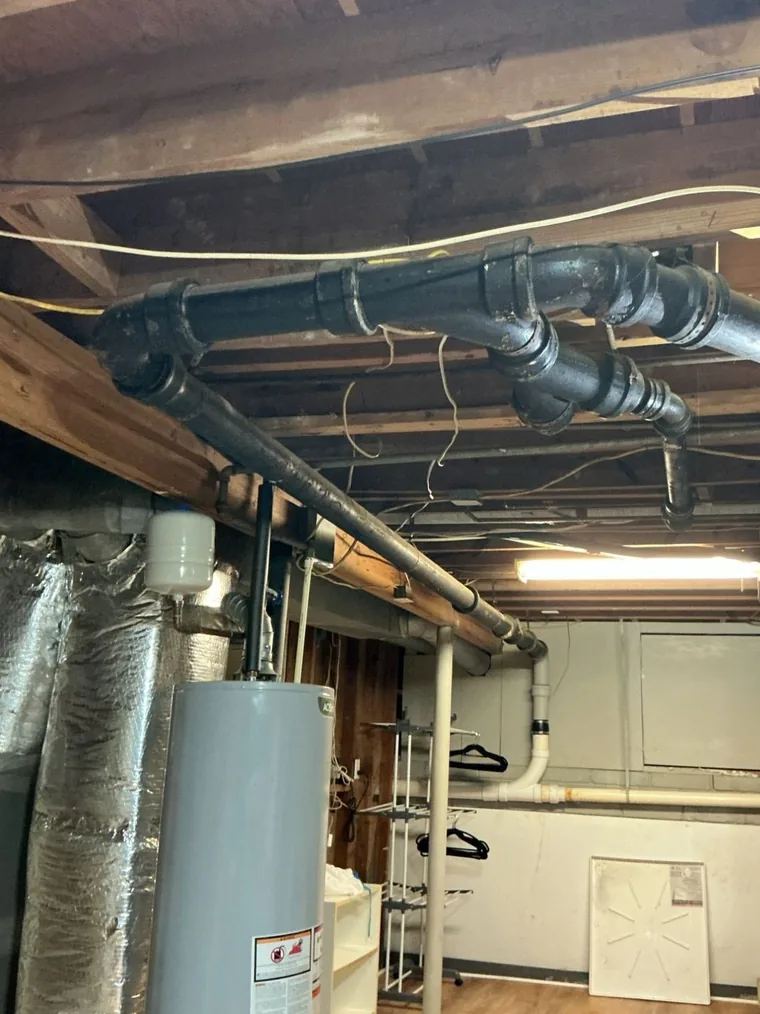
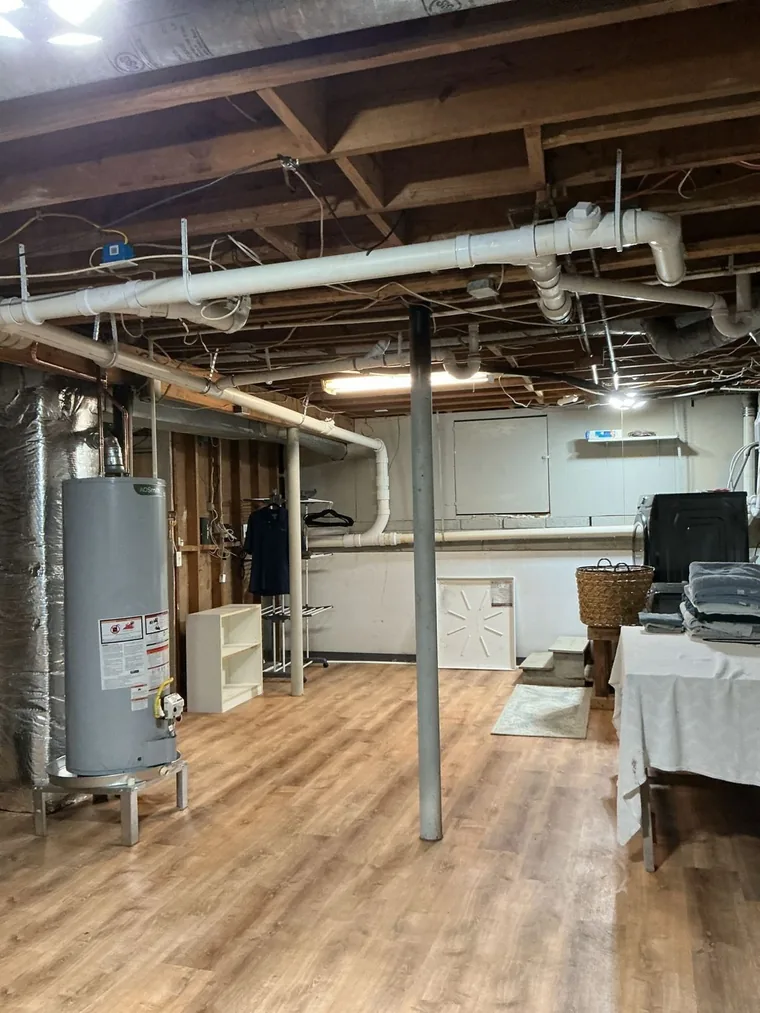
Drain lines can be repiped too: old drain pipes that crack, leak or keep clogging are replaced with new PVC.
If the problem has already soaked floors, walls or cabinets, the same call covers extraction, drying and repairs.
About water damage restorationWhat you get
- Licensed master plumber
- Licensed general contractor
- In-house drywall repair
Questions
Do you patch the walls afterwards?
Yes. Our own crew repairs the drywall when the plumbing work is finished.
Can we stay home during a repipe?
Usually, yes. The water has to be off during parts of the work, and we'll tell you when.
Do you charge to come out?
No. There's no dispatch fee. Once we're on site and have seen the problem, we give you an upfront estimate for the work needed.