Do this first
- If the tank is leaking, shut off its water. Close the cold-water valve on the pipe above the heater.
- Turn off the power or gas. Switch off the breaker for an electric heater, or turn the gas control to off.
- Keep clear of hot water. Water from the tank and the relief valve can scald.
- Smell gas? Get out first. Leave the house and call your gas company or 911 from outside.
Repair or replace?
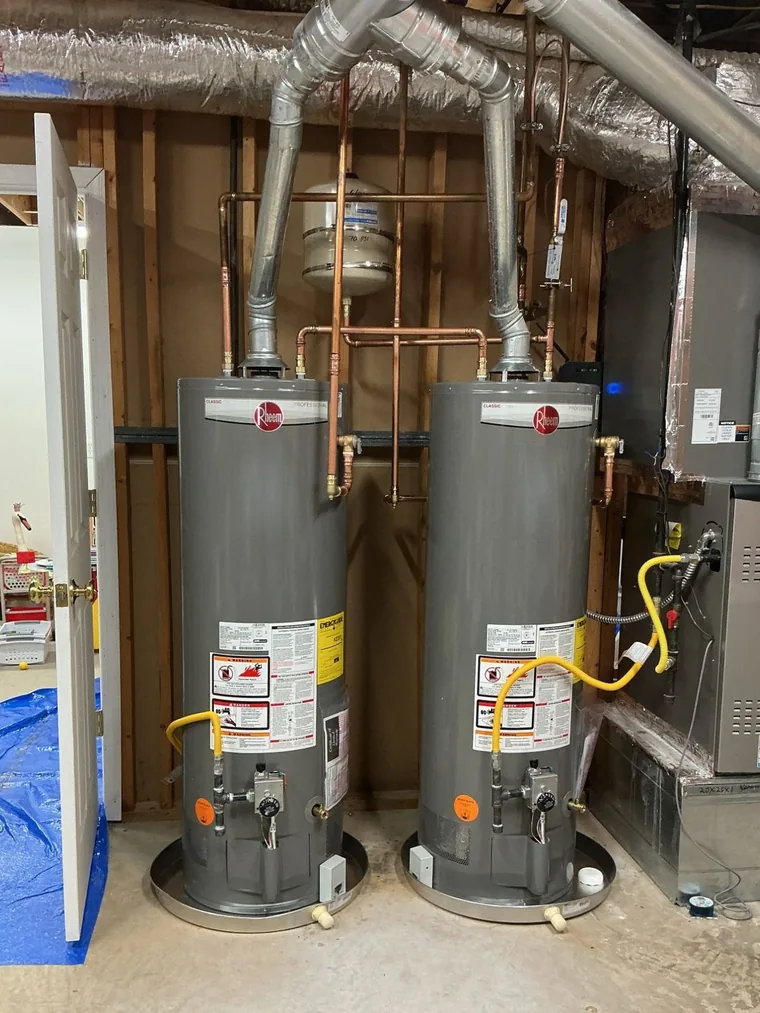
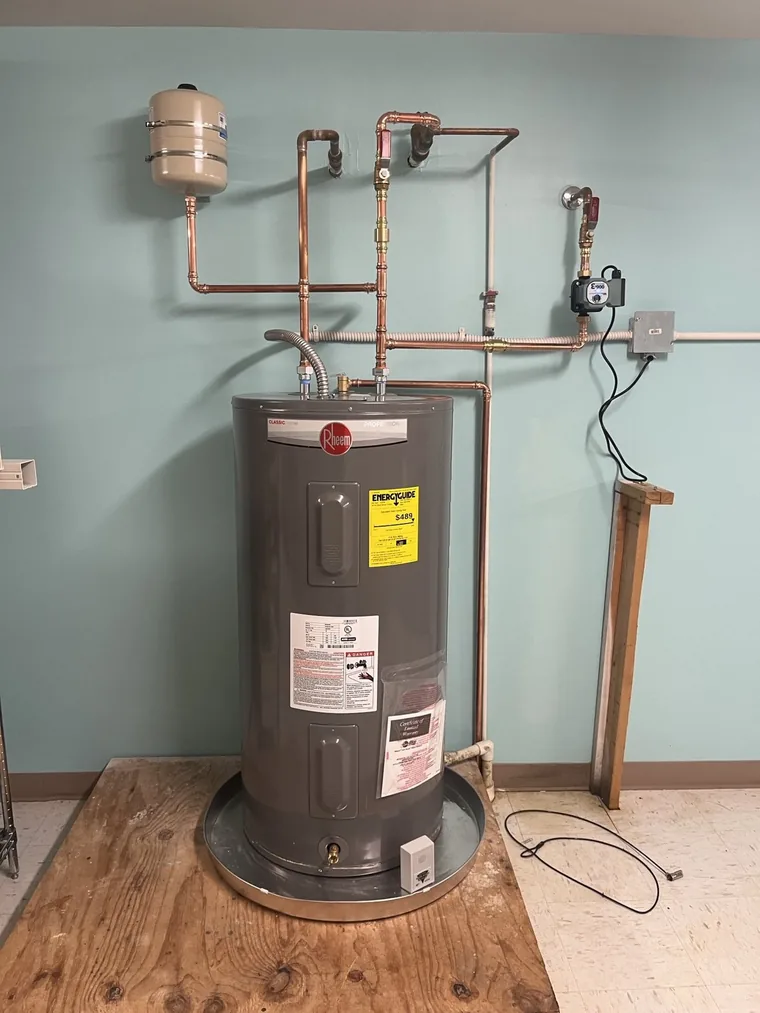
Many problems can be fixed: a failed heating element or thermostat, a burner or pilot problem, a bad valve. A leaking tank can't be repaired, and an older heater that keeps failing can cost more to keep than to replace. We explain the options and the price before any work starts.
Signs your water heater needs attention
- No hot water, or it runs out fast
- Water pooling around the base
- Rusty or discolored hot water
- Popping or rumbling noises from the tank
- The relief valve dripping or discharging
Water damage handled too
If the problem has already soaked floors, walls or cabinets, the same call covers extraction, drying and repairs.
About water damage restorationWhat you get
- Licensed master plumber
- Upfront estimate on site
- Water damage cleanup if needed
Questions
How do I know if my water heater needs replacing?
Leaks from the tank itself, rust in the hot water and repeated breakdowns are the usual signs. Age matters too. We'll tell you whether a repair still makes sense.
Do you handle water heater emergencies at night?
Yes. Plumbing calls are taken 24/7.
Do you charge to come out?
No. There's no dispatch fee. Once we're on site and have seen the problem, we give you an upfront estimate for the work needed.